By: Thai Massage Center | Cyprus
You finish a workout, a long run or an unusually active day, and everything feels fine. Then the next morning arrives.
Your muscles feel sore, ordinary movements take more effort, and you start looking for ways to feel more comfortable.
Cyprus may be a popular holiday destination, but not everyone comes here just to rest. Many visitors continue their usual workout routines or enjoy activities such as running, swimming, cycling and other sports during their stay. And for people who live on the island, staying active is simply part of everyday life.
Massage is often one of the first things people consider. But does it actually help your muscles recover, or does it simply feel good at the time?
The answer is more interesting than a simple yes or no.
Research suggests that massage may offer modest benefits for certain types of muscle soreness, but that does not mean it can accelerate every aspect of recovery or improve athletic performance.
Understanding the difference can help you decide when massage may be worth considering and what you should realistically expect from a session at Thai Massage Center in Cyprus.
Research suggests that massage may slightly reduce delayed onset muscle soreness after exercise, but there is no convincing evidence that it consistently improves strength, endurance or athletic performance. Most of this evidence comes from studies of sports massage rather than Traditional Thai Massage specifically.
What Happens to Your Muscles After Exercise?
Not every uncomfortable sensation after exercise means the same thing.
Muscles can feel tired immediately after physical activity. You may also experience stiffness or soreness later, particularly after an unfamiliar workout or a session that challenges your muscles in a new way.
One common example is delayed onset muscle soreness, often called DOMS.
DOMS typically develops after unfamiliar or demanding exercise, particularly activities involving controlled muscle lengthening under load. It may become more noticeable over the following one to three days before gradually improving.
It is different from the immediate fatigue you might experience during exercise, and it should not be confused with an injury.
That distinction matters because different problems require different responses.
Ordinary post exercise soreness often improves with time. Sharp pain, significant swelling, marked weakness or symptoms that seem unusual deserve a different level of attention.
Massage may have a place in how you manage everyday soreness, but it is not a substitute for identifying an injury.
Does Massage Actually Help Muscle Recovery?
Research on massage and exercise recovery has produced a useful distinction between how people feel and how their muscles perform.
A systematic review and meta analysis published in BMJ Open Sport & Exercise Medicine in 2020 examined 29 studies involving 1,012 participants.
The researchers found no convincing evidence that sports massage improved measures such as strength, jumping, sprinting, endurance or fatigue.
However, they identified small improvements in delayed onset muscle soreness and flexibility.
That means massage may help some people feel less sore after exercise, without necessarily making them stronger, faster or physically recovered sooner.
This is an important difference.
Feeling more comfortable is a worthwhile outcome in its own right. It simply should not be confused with proof that massage repairs muscles more quickly or improves the results of your training.
The review examined sports massage rather than Traditional Thai Massage specifically, so its findings should not be presented as direct evidence that every Thai Massage treatment produces the same effects.
Why Less Soreness Does Not Always Mean Faster Recovery
Imagine two people who complete the same demanding workout.
The following day, one reports less muscle soreness after receiving a massage. That person may feel more comfortable moving around, but it does not automatically follow that their muscles have recovered more quickly.
Soreness is a subjective experience. Physical recovery involves several processes, and no single feeling captures all of them.
This is why research often examines separate outcomes, including perceived soreness, strength, flexibility and fatigue.
The results do not always move in the same direction.
For someone booking a massage, the practical lesson is straightforward: choose it for an experience you value, without expecting it to replace the normal recovery process.
Rest, appropriate nutrition, hydration and a sensible return to activity remain important parts of recovery after exercise.
Where Does Thai Massage Fit In?
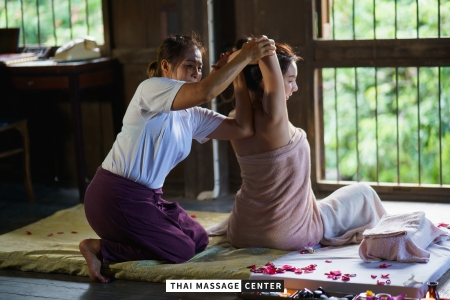
Traditional Thai Massage has a distinctive approach that combines pressure, movement and assisted stretching.
At Thai Massage Center, it is one of several available treatments, alongside Oil Massage, Thai Massage with Oils and more focused options.
Someone who enjoys traditional Thai bodywork may be interested in a session after a period of physical activity.
However, Thai Massage should not automatically be treated as sports rehabilitation.
Its techniques and the intensity of the treatment need to be appropriate for the individual, particularly when muscles are already sensitive.
While research on sports massage offers useful context, it cannot establish the specific recovery benefits of Traditional Thai Massage without studies examining that treatment directly.
If you have recently completed a demanding workout, it is useful to tell your Thai therapist what activity you have been doing and whether any areas feel unusually sore.
That information can help guide a discussion about comfort and the suitability of the session.
There is no reason to assume that more pressure will produce better recovery.
What About Oil Massage After Exercise?
Oil Massage offers a different treatment experience.
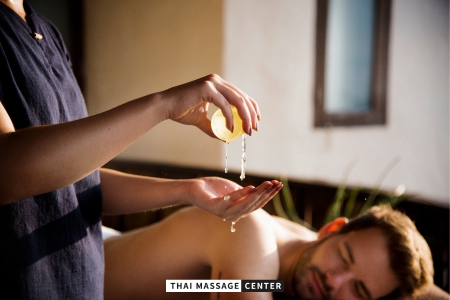
At Thai Massage Center, the treatment incorporates oils as the Thai therapist works across different areas of the body.
Some people may prefer this style when they want a massage without specifically seeking the traditional movement based approach associated with Thai Massage.
The choice should be based on your preferences and the condition of your body at the time, rather than the assumption that one treatment has been scientifically proven superior for exercise recovery.
Research comparing different massage approaches is not strong enough to establish a universally best massage for post exercise soreness.
If you are unsure which treatment is suitable after a demanding activity, ask about the options before booking.
How Soon After a Workout Should You Book?
There is no single waiting period that has been established as appropriate for every person, every workout and every type of massage.
The answer depends on what you have done, how you feel and whether there are any signs of injury.
After ordinary physical activity, you may simply want to schedule a massage at a time when you feel comfortable.
Following an unusually demanding session, it may be sensible to allow some time to assess how your body responds before deciding on treatment.
If you are experiencing substantial soreness, let your Thai therapist know rather than assuming that the session should proceed exactly as usual.
The aim is to make an informed choice, not to follow an arbitrary recovery timetable.
Choosing a Massage in Cyprus After an Active Week
You do not need to be a professional athlete to be interested in exercise recovery.
People in Cyprus enjoy a wide range of physical activities, from gym training and running to swimming, cycling and recreational sports.
The relevant question is not whether your activity was impressive enough to justify a massage.
It is whether massage is appropriate for you and what kind of experience you would like.
Thai Massage Center offers Traditional Thai Massage, Oil Massage, Thai Massage with Oils, Foot Massage and Reflexology, and Back and Shoulders Massage.
The centre has locations in Larnaca, Nicosia and Ayia Napa, with Thai therapists who specialise in Thai Massage.
Before choosing a treatment, consider how you feel after your activity, whether any areas are particularly sensitive and whether you have symptoms that require medical attention.
If massage is appropriate, you can explore the available options according to your preferences.
Frequently Asked Questions
Can massage reduce muscle soreness after exercise?
Research on sports massage suggests it may produce a small reduction in delayed onset muscle soreness. However, the evidence does not establish that all types of massage, including Traditional Thai Massage, provide identical benefits.
Does massage make muscles recover faster?
There is insufficient evidence to conclude that massage reliably accelerates all aspects of muscle recovery. Studies have not consistently demonstrated improvements in strength, endurance or athletic performance.
Is Thai Massage good after a workout?
Some people may enjoy Thai Massage after physical activity, but suitability depends on their condition and the treatment techniques involved. It should not be assumed to be appropriate for an injury or severe soreness.
How long after exercise should you wait before getting a massage?
There is no single waiting period that applies to everyone. The appropriate timing depends on the activity, how you feel and whether there are signs of injury. If you have significant soreness or a suspected injury, seek appropriate advice before booking.
Is stronger massage better for recovery?
No. Stronger pressure is not necessarily more effective and may be inappropriate when tissues are sensitive or injured.
Should I book a massage if I think I have a muscle injury?
Seek appropriate medical assessment first. Massage should not be used to diagnose or treat a suspected injury without suitable professional guidance.
What Should You Really Expect From Massage After Exercise?
Massage can be a useful part of how some people approach physical wellbeing, but realistic expectations matter.
The strongest conclusion from the available research is not that massage transforms athletic recovery. It is that massage may modestly reduce certain types of soreness, while evidence for improvements in physical performance remains limited.
For Traditional Thai Massage specifically, more research is needed before making strong claims about exercise recovery.
If you are physically active and interested in massage, start by considering how you feel, what treatment experience you prefer and whether massage is appropriate for your circumstances.
Explore the treatments available at Thai Massage Center in Cyprus and choose a session that fits your needs.
References
- Davis HL, Alabed S, Chico TJA. Effect of sports massage on performance and recovery: a systematic review and meta-analysis. BMJ Open Sport & Exercise Medicine. 2020;6. https://doi.org/10.1136/bmjsem-2019-000614
- National Center for Complementary and Integrative Health. Massage Therapy: What You Need To Know.https://www.nccih.nih.gov/health/massage-therapy-what-you-need-to-know
- Centers for Disease Control and Prevention. Signs and Symptoms of Rhabdomyolysis.https://www.cdc.gov/niosh/rhabdo/signs-symptoms/index.html