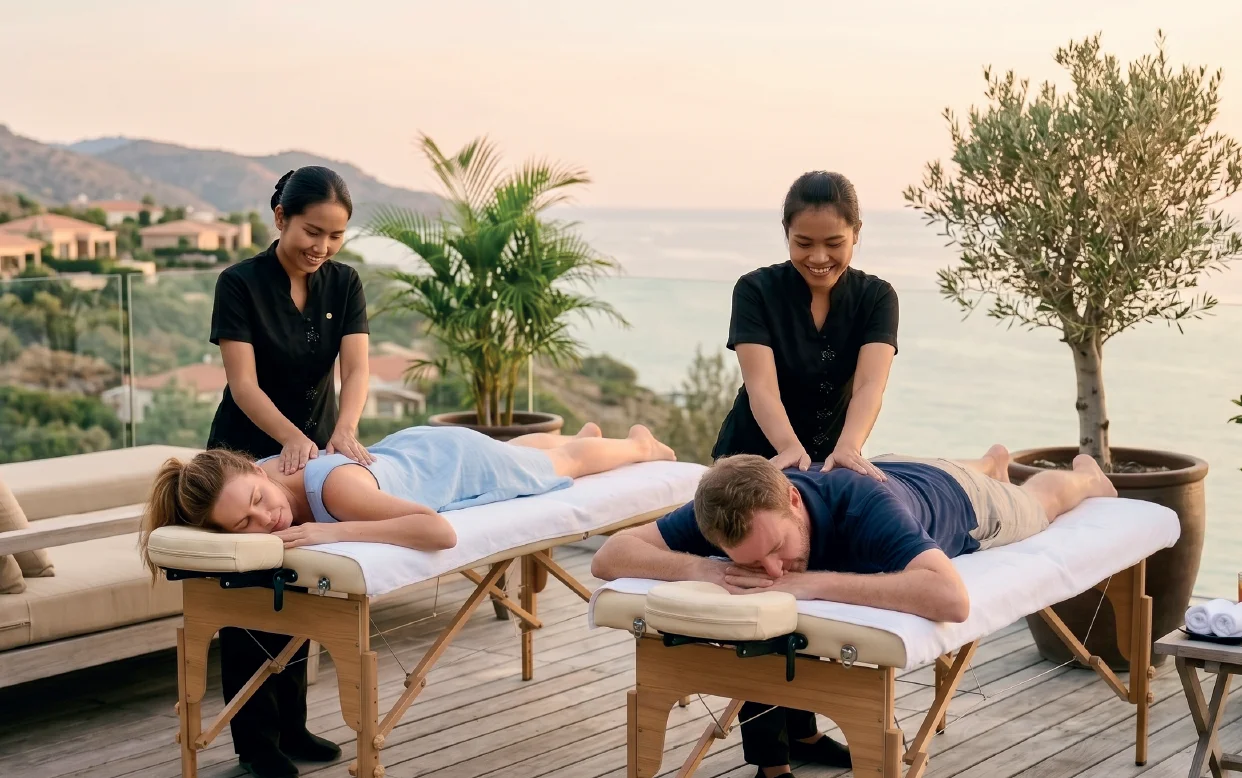
When most people picture a massage, they imagine lying on a treatment table while a therapist uses oil and works directly on the muscles. Walk into a traditional Thai massage session and the experience looks quite different.
You remain clothed, the treatment traditionally takes place on a supportive mat, and instead of relying mainly on rubbing or kneading, the therapist combines pressure with movement and assisted stretching. At different points in the session, your arms or legs may be gently moved, your body may be guided into a stretch, or pressure may be applied using the therapist’s hands, palms, thumbs or body weight.
This combination is one of the things that makes traditional Thai massage distinctive. But why does the treatment involve so much movement? Why does the therapist sometimes work on an area other than the one that feels stiff? And should the pressure feel strong?
Understanding what happens during a Thai massage can make your first session feel much less mysterious and help you communicate more clearly with your therapist.
Thai Massage Is About More Than One Sore Spot
It is natural to focus on the place where you feel tension. If your shoulders feel stiff, you think about your shoulders. If your lower back feels tired, that is where you expect the therapist to work.
Traditional Thai massage takes a broader approach.
The way we move throughout the day involves many areas of the body working together. Walking, standing, travelling, exercising, carrying bags or simply staying in one position for a long time can leave several areas feeling tired or stiff at once.
For this reason, a Thai massage session may include work on areas surrounding the place where you notice the most tension. If your lower back feels stiff, for example, the therapist may also work around your legs and hips. If your shoulders feel tired, the session may include movement through the arms, upper back and chest area.
This does not mean that every uncomfortable area has a hidden cause somewhere else. It simply reflects the whole body approach used in traditional Thai massage, where pressure, movement and stretching are combined rather than focusing exclusively on one spot.
Why Does Thai Massage Use Pressure?
Pressure is one of the most recognisable parts of Thai massage, but its purpose is not to test how much discomfort you can tolerate.
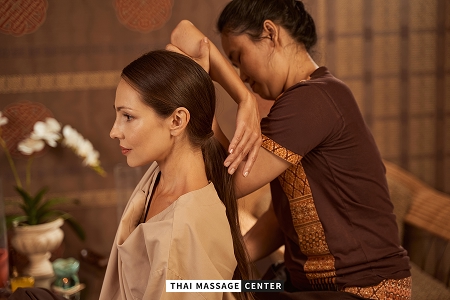
Traditional techniques may use the thumbs, palms, hands and sometimes the therapist’s body weight to apply controlled pressure to different areas. The therapist can adjust the intensity depending on the part of the body being treated and your individual comfort level.
Traditional Thai practice also includes the concept of Sen lines. These are pathways described within the traditional Thai understanding of the body and have an important place in the history and practice of Thai massage.
It is important, however, not to confuse this traditional framework with modern anatomical structures. Sen lines belong to the traditional system behind Thai massage and do not need to be explained as nerves, blood vessels or other structures in Western anatomy.
For the person receiving the treatment, the practical point is much simpler. Pressure is applied gradually and deliberately, and it can be combined with movement and stretching throughout the session.
And stronger pressure is not automatically better.
A professional Thai massage should be adapted to the person receiving it. If something feels too intense or uncomfortable, tell your therapist. Good communication is part of the treatment, not an interruption to it.
Why Is Assisted Stretching Such an Important Part of Thai Massage?
This is where many people notice the biggest difference between Thai massage and other massage styles.
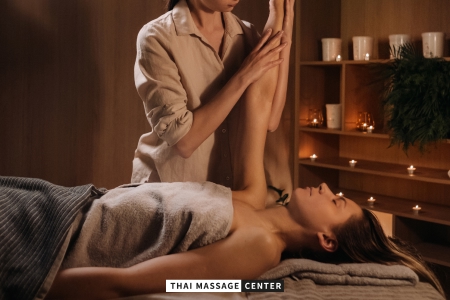
During assisted stretching, you are not doing the stretch alone. The therapist supports and guides part of your body through a comfortable movement or position.
Imagine stretching your leg by yourself. You need to control the movement, maintain your balance and decide how far to go. During an assisted stretch, the therapist takes on much of that work and guides the movement while you remain supported.
This can allow you to focus on relaxing rather than actively holding the position.
Depending on the treatment, assisted movements may involve the legs, hips, arms, shoulders or torso. Some movements are small and gentle, while others may feel similar to familiar stretches.
This is also why Thai massage is sometimes informally compared with passive yoga. There are similarities in the use of guided positions and stretching, but you are not performing a yoga routine. The therapist controls the movement and adapts it to your comfort and range of motion.
The aim is never to force the body into the deepest possible stretch. A useful stretch should remain controlled and appropriate for the person receiving it.
Why Does the Therapist Work on Different Parts of the Body?
One question people may have during a treatment is: why are we working here when the tension I mentioned is somewhere else?
The answer is often connected to the way Thai massage is structured.
Rather than treating the body as a collection of completely separate areas, a full Thai massage may move through different regions in a sequence. Pressure in one area can be followed by movement in another, with stretches introduced as the treatment progresses.
Take tired legs as a simple example. After a day that involves plenty of walking, standing, swimming or physical activity, you may notice fatigue in your calves. A Thai massage does not necessarily need to focus only on the calves. The treatment may also include the feet, thighs and movements through the legs and hips.
The same principle can apply when someone arrives with a stiff back or tired shoulders. The area that feels most noticeable can receive attention without becoming the only focus of the entire treatment.
This broader approach is one of the characteristics that distinguishes traditional Thai massage from treatments designed primarily to concentrate on one muscle or one small area.
What Can Thai Massage Offer After an Active Day?
Cyprus makes it easy to have a very active day without necessarily planning one.
A morning exploring a city, time at the beach, swimming, sightseeing or simply walking more than usual can leave your legs, feet or back feeling tired by the evening. Travel itself can also involve long periods of sitting followed by suddenly becoming much more active once you arrive.
Thai massage can be particularly appealing in these situations because movement is already built into the treatment.
Instead of remaining completely passive while one area is massaged, your session can combine pressure with guided movement and stretching. For someone feeling generally stiff or tired after physical activity, this can offer a different experience from a massage focused mainly on relaxation.
That does not mean Thai massage should be treated as a cure for pain or an alternative to medical care. If you have an injury, persistent pain or a health condition that may affect whether massage is appropriate, it is important to seek suitable medical advice and inform your therapist before the treatment begins.
Thai Massage or Oil Massage: What Is the Difference?
Choosing a massage is easier when you understand what kind of experience you are looking for.
Traditional Thai massage generally focuses more on pressure, assisted movement and stretching. You remain clothed, and oil is not normally required for the traditional treatment.
Oil massage is a different experience. Oil allows the therapist to use smoother, gliding movements directly on the skin. For someone whose main priority is slowing down and enjoying a gentler massage experience, this may be preferable.
Neither option is automatically better.
If you are interested in movement, stretching and the distinctive techniques associated with traditional Thai bodywork, Thai massage may be the more suitable choice. If you prefer flowing movements and a treatment centred more strongly on relaxation, an oil massage may appeal to you more.
Understanding this difference before booking can help you choose based on what you actually want from the session rather than simply selecting the massage name that sounds most familiar.
What Should You Expect During Your First Thai Massage?
If you have never experienced traditional Thai massage before, knowing a few practical details can make the session more comfortable.
Wear clothing that allows you to move easily. Loose, comfortable clothes make it easier for the therapist to guide your arms and legs through different positions.
Avoid arriving immediately after a large meal. Because the treatment can involve movement and different body positions, giving yourself some time after eating can simply make the experience more comfortable.
Most importantly, communicate.
Tell the therapist if you have an area that feels particularly sensitive, if a position is uncomfortable or if the pressure feels stronger than you would like. Massage is not a test of endurance.
The therapist can adjust pressure and movement throughout the treatment. You do not need to wait until something becomes painful before saying something.
After the session, give yourself a little time before rushing into the next part of your day if your schedule allows. Drink according to your normal thirst and hydration needs. There is no need for special detox routines or excessive amounts of water after a massage.
Frequently Asked Questions About Thai Massage
Does traditional Thai massage use oil?
Traditional Thai massage is generally performed without oil and while the client remains clothed. Other treatments, including Thai massage with oils and oil massage, use different techniques and provide a different experience.
Should Thai massage hurt?
Thai massage can include firm pressure and noticeable stretching, but the treatment should not become a test of how much pain you can tolerate. Pressure and movement should be adjusted to your comfort. Tell your therapist whenever something feels too intense.
Do I need to be flexible to have a Thai massage?
No. You do not need to be flexible or experienced with stretching. The therapist guides the movements and should work within a range that is comfortable for you. Assisted stretching is adapted to the person rather than expecting the person to adapt to a fixed position.
How often should I have a Thai massage?
There is no single schedule that is right for everyone. How often you choose to have a massage depends on your preferences, lifestyle, reasons for booking and how your body responds to treatment. If you have an ongoing health concern or persistent pain, massage frequency should not replace appropriate advice from a healthcare professional.
What should I tell my therapist before the treatment?
Let your therapist know about relevant injuries, sensitive areas, recent procedures, pregnancy or health conditions that could affect the treatment. You should also mention your pressure preferences and speak up during the session if anything feels uncomfortable.
Understanding the Treatment Changes the Experience
Thai massage can look unusual when you first encounter it. There is pressure, stretching, guided movement and a therapist who may work across several areas rather than remaining focused on one place.
Once you understand the reasoning behind the treatment, those elements start to make more sense.
Traditional Thai massage is not about pushing the body as far as possible or applying the strongest pressure you can tolerate. It is a form of traditional bodywork that combines controlled pressure, assisted movement and stretching, with the treatment adapted to the person receiving it.
At Thai Massage Center, you can experience traditional Thai massage with professional Thai therapists across our Cyprus locations. If you are curious about the techniques described here, explore our treatments and choose the experience that best matches what you are looking for.